

Construction Site Cleanup Guide for NJ Jobs

A job site starts feeling out of control long before the project is actually behind schedule. It usually begins with a growing pile of scrap wood, broken drywall, empty boxes, torn-out materials, and loose debris underfoot. That is exactly why a solid construction site cleanup guide matters. A cleaner site is safer to work on, easier to manage, and a lot more likely to stay on schedule.
For contractors, property managers, and homeowners handling renovations in South Jersey, cleanup is not the extra step at the end. It affects the whole job. When debris is allowed to build up, crews lose time walking around it, materials get mixed together, and small hazards turn into avoidable problems. Good cleanup keeps the site moving and keeps the final handoff looking professional.
Why a construction site cleanup guide matters
Construction debris has a way of spreading fast. A small bathroom remodel can create piles of tile, drywall scraps, old fixtures, cardboard, and dust in a single day. A larger commercial or whole-home project can generate enough waste to clog work areas, block access points, and slow every trade on site.
That is the real reason cleanup should be planned, not improvised. A site that stays reasonably clear during the project is easier to work on and easier to finish. Crews can move materials where they need them. Property owners can inspect progress without stepping over junk. And the last phase of the job does not turn into a rushed scramble to clear everything out at once.
There is also a customer side to this. People notice the condition of a work site. A clean, organized space gives the impression that the project is being handled professionally. A messy one raises questions, even if the actual construction work is solid.
Start with the type of debris you expect
Not every project creates the same waste, so the cleanup plan should match the job. Interior remodels often create drywall, flooring, trim, cabinets, doors, insulation, and packaging. Exterior work may involve shingles, siding, fencing, concrete, masonry, and landscaping debris. Demolition can create a heavier mix that needs more room, more labor, and the right hauling setup.
This matters because cleanup gets more expensive and time-consuming when the debris is underestimated. Light material may be easy to bag and stack, while heavier debris like tile, plaster, brick, and concrete can require a different container or more frequent hauling. Some items also need to be separated or handled carefully, depending on local disposal requirements.
If you know the scope of the work before it starts, you can make better decisions about labor, staging, and disposal. That alone can save time and avoid mid-project headaches.
Keep cleanup moving during the job
The biggest mistake on many projects is waiting until the end to think about debris. By then, the site is usually harder to navigate, and the final cleanup takes longer than expected.
A better approach is ongoing site cleanup. That means clearing out obvious debris as each phase wraps up instead of letting everything pile together. Demo waste should be removed or contained early. Packaging should not stay scattered around active work areas. Scrap material should be placed in a designated spot, not left wherever it lands.
Daily or every-other-day cleanup often makes more sense than one big haul at the end, especially on tighter residential properties. It keeps pathways open, helps prevent trips and falls, and reduces the chance that materials blow around the site or get soaked by weather.
There is a trade-off, of course. More frequent cleanup can mean more labor or more pickup scheduling. But on active jobs, that cost is often worth it because it reduces delays and keeps the site easier to manage.
Choose the right cleanup method
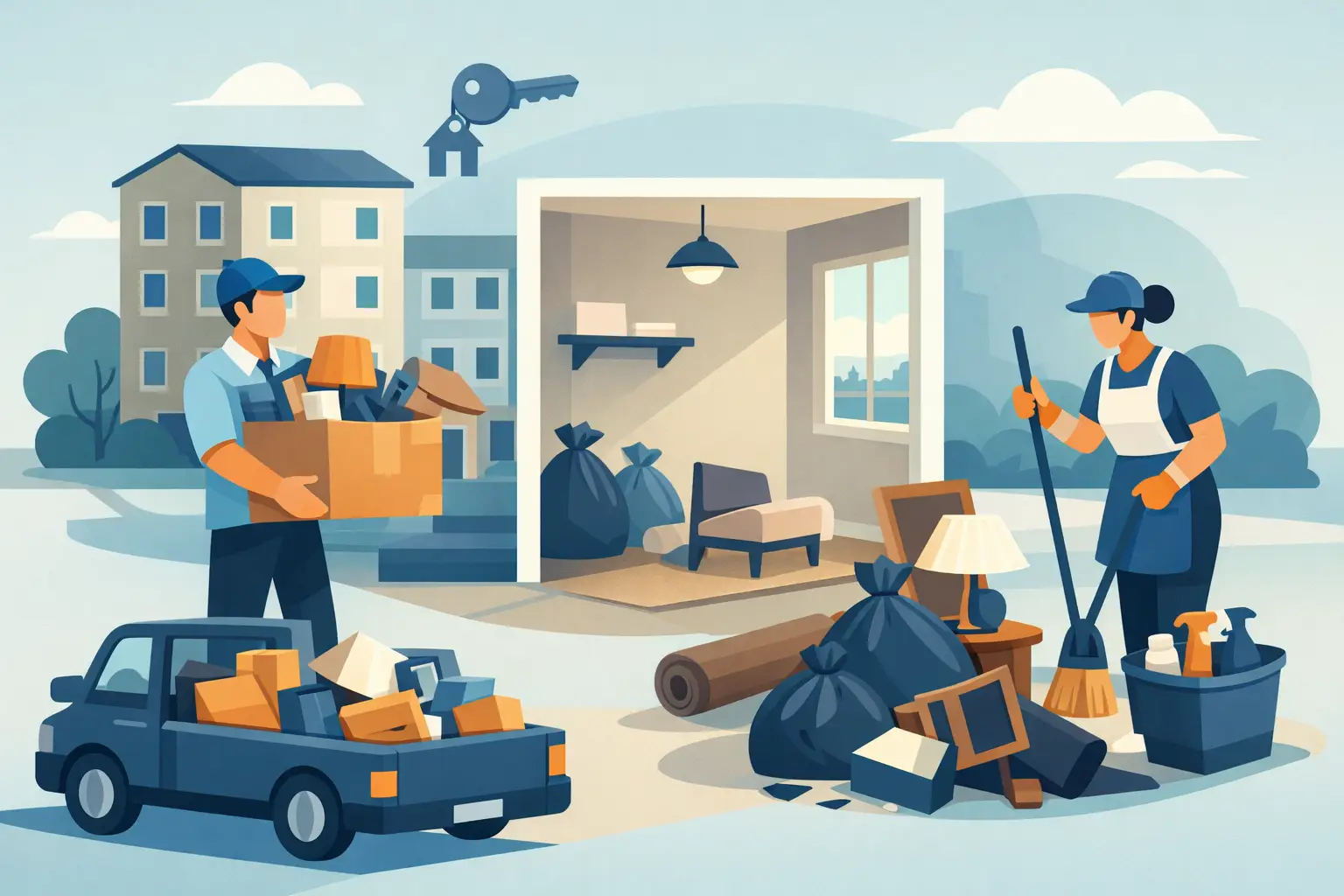
Most jobs come down to two practical options. You either use a roll-off dumpster on site, or you bring in a crew to load and haul debris away.
A dumpster rental is a good fit when the project will create steady waste over several days or weeks. It gives the crew one central place to toss debris and keeps material contained instead of spread around the property. This is often the easiest option for remodels, roofing jobs, flooring replacements, and larger cleanouts tied to construction.
Full-service removal makes more sense when debris is already piled up, when access is tight, or when no one on site has the time to handle loading. It also works well for final cleanups, post-demo hauling, and jobs where materials need to be carried out from inside the building. For many property owners and smaller contractors, paying for labor saves a lot of time and strain.
Sometimes the best answer is a mix of both. A dumpster can handle the day-to-day debris, and a hauling crew can take care of the heavier final pass. It depends on the size of the project, the amount of space available, and how hands-on you want to be.
Safety and access should guide the cleanup plan
A good construction site cleanup guide is not just about getting rid of junk. It is about keeping the site workable and reducing risk.
Loose debris near entrances, stairways, driveways, and walk paths is where problems start. Nails, broken glass, sharp metal, and uneven stacks of scrap all create hazards. Dust and smaller debris can also spread into finished areas or neighboring spaces if cleanup is ignored too long.
That is why access points should stay clear throughout the project. Material piles need to be placed where they do not block workers, vehicles, or deliveries. If a dumpster is being used, it should be positioned where loading is practical but not in the way of the rest of the job.
For occupied homes or commercial spaces, cleanup matters even more. Customers, tenants, staff, or family members may still be walking through parts of the property. In those cases, a cleaner site is not just better looking. It is part of keeping the area usable and reducing liability.
Don’t overlook the final cleanup
The final cleanup is what people remember. Even when the build quality is excellent, leftover dust, debris, and random materials can make the whole project feel unfinished.
Final construction cleanup usually goes beyond hauling away large debris. It may include removing scraps from corners and closets, clearing exterior material, sweeping garages and driveways, and making sure no leftover waste is sitting around the property. The exact level of detail depends on the job, but the goal is simple. When the work is done, the space should look ready to use.
This is where planning helps again. If the site has been maintained throughout the project, the final cleanup goes faster. If debris has been piling up for weeks, the last stage often takes longer than expected and can delay turnover.
What homeowners and contractors in South Jersey should keep in mind
A lot of properties in Atlantic County and nearby South Jersey towns come with real-world cleanup challenges. Some have tight driveways. Some have limited street access. Shore-area weather can also complicate debris control, especially with lighter material and open containers.
Older homes bring another layer. Renovation debris may come out in uneven phases, and material can be heavier than expected. On commercial properties, the challenge is often timing - cleanup has to happen without slowing business operations or blocking shared access.
That is why local help can make a difference. A company that already understands the area, the property layouts, and the pace of these jobs can usually make the cleanup side simpler. The Junk Bros. LLC handles construction debris removal, hauling, demolition cleanup, and dumpster rentals across South Jersey, so customers can choose the option that fits the job instead of forcing one approach onto every project.
A simple construction site cleanup guide for better results
If you want the job to stay cleaner from start to finish, keep the plan simple. Know what debris the project will create. Decide early whether a dumpster, hauling service, or a combination makes the most sense. Keep cleanup moving during the work instead of saving it all for the end. And make the final pass thorough enough that the site actually feels finished.
Cleanup is one of those parts of a project that people tend to underestimate until it starts causing delays, safety issues, or complaints. Handled the right way, it does the opposite. It helps the site run smoother, protects the property, and leaves a better impression when the work is done.
If a project already has enough moving parts, the cleanup side should not be another problem to solve at the last minute. A clean site gives everyone more room to work and one less thing to worry about.


Comments