

How Much Does Junk Removal Charge?

If you have an old couch in the garage, construction debris in the driveway, or a whole property that needs to be cleared out, one question usually comes first - how much does junk removal charge? The short answer is that pricing can range from a small minimum pickup fee to several hundred dollars or more, depending on how much you need removed, what kind of material it is, and how hard the job is to complete.
That range can feel wide, but there is a reason for it. Junk removal is not priced like ordering a standard product. Every job is a little different. A single mattress on the curb is not the same as a full basement cleanout, and a pile of yard waste is not the same as tearing out a hot tub or hauling shingles from a roofing project.
How much does junk removal charge on average?
For most homeowners and small businesses, junk removal pricing is usually based on volume, labor, and disposal cost. A small pickup might cost roughly $100 to $175. A medium load can land in the $200 to $400 range. A fuller truckload or major cleanout can run $500 to $800 or more, especially if the job includes heavy lifting, difficult access, or materials that cost more to dump.
Those numbers are only ballpark estimates, not fixed rates. In South Jersey, actual pricing can shift based on local dump fees, travel distance, and the kind of service you need. If a company offers free on-site estimates, that is usually the best way to get an accurate number instead of guessing from a photo or a general online chart.
What actually affects the price?
The biggest factor is usually how much space your junk takes up in the truck. Most removal companies price by how full the truck gets because volume is an easy way to measure a job. One recliner and a few boxes will cost a lot less than clearing out an entire attic, garage, and shed.
Weight matters too. Heavy materials can drive up the cost even if they do not take up much room. Concrete, dirt, brick, roofing shingles, and demolition debris are common examples. These loads are harder on equipment, take more effort to move, and often come with higher disposal fees.
The type of junk also matters. General household clutter is usually simpler to price than appliances, electronics, tires, or mattresses. Some items require special handling or carry extra fees at disposal facilities. If you are getting rid of a refrigerator, for example, the company may need to account for proper disposal requirements.
Access is another part of the equation. A quick curbside pickup is faster and easier than removing furniture from a third-floor apartment with no elevator. Tight hallways, long carry distances, stairs, and jobs that require taking items apart can all increase labor time.
Then there is the size of the crew and the time involved. Some jobs need one truck and two people. Others need multiple workers, extra loading time, or more than one trip. That is why two jobs that look similar at first can end up with different quotes.
Single-item pickups vs. full cleanouts
A lot of customers assume junk removal is only for large jobs, but single-item pickups are common. If you need one couch, mattress, appliance, or dining set removed, many companies can handle that for a minimum charge. The exact price depends on the item, where it is located, and whether there are disposal surcharges.
Full cleanouts are different. Estate cleanouts, foreclosure cleanouts, rental property turnovers, office clear-outs, and post-construction cleanup are priced at a much higher level because they involve more volume, more labor, and usually more sorting. These jobs can move quickly once a crew is on site, but they still require planning, loading, hauling, and proper disposal.
If you are somewhere in the middle, like clearing out a garage or getting rid of old furniture before a move, your price will usually land between those two ends of the range.
How labor changes the cost
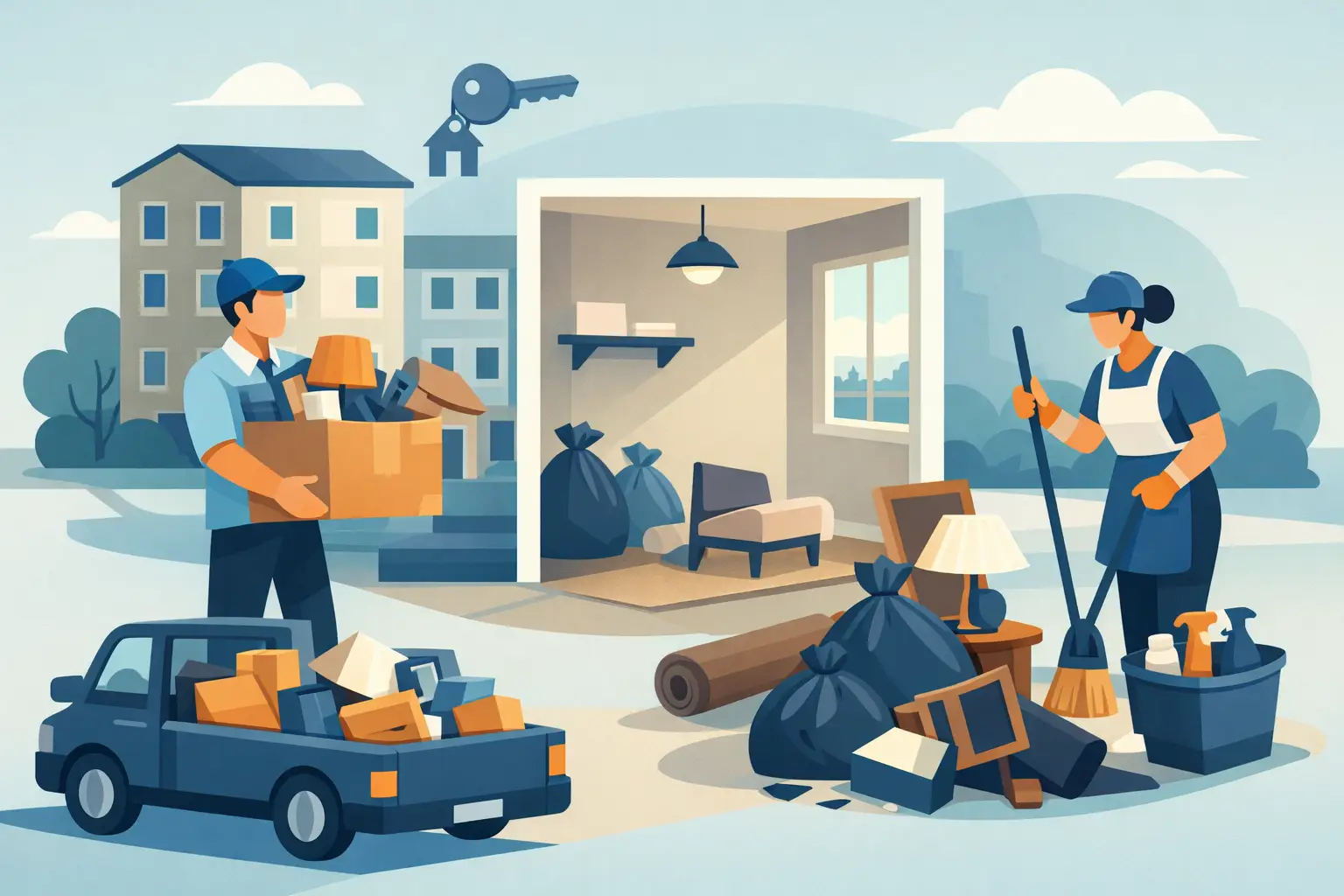
Junk removal is not only about hauling things away. A big part of what you are paying for is labor. That includes lifting, carrying, loading, sorting, and making sure the area is left clean and safe.
This is where do-it-yourself cleanup and full-service junk removal split apart. Renting a truck or trailer might look cheaper on paper, but you still have to do the heavy lifting, figure out where everything can legally be dumped, pay disposal fees, and spend your own time on the job. For many homeowners, property managers, and contractors, the value is in having someone else handle the hard part from start to finish.
That is especially true when the job involves bulky furniture, demo debris, or awkward items that are not easy to move without help. Saving money matters, but so does avoiding injuries, property damage, and wasted time.
When a dumpster rental may make more sense
If you are cleaning out a property over several days, doing renovation work, or managing a jobsite, a dumpster rental can sometimes be the better option. Instead of paying for a crew to load everything in one visit, you get a container dropped off and fill it on your own schedule.
That can be a smart choice for contractors, landlords, and homeowners doing bigger projects with steady debris. It gives you more time and more control. On the other hand, if you want the fastest and easiest option, full-service junk removal is usually the better fit because you do not have to lift, load, or haul anything yourself.
The right option depends on the job. If your main goal is convenience, labor matters. If your main goal is managing debris over time, a dumpster often fits better.
How to know if a quote is fair
A fair quote should be clear and easy to understand. You should know whether pricing is based on truck volume, labor, item type, or a flat project rate. If there are added costs for mattresses, appliances, tires, or heavy construction materials, those should be explained upfront.
Free estimates are helpful because they let the company see access, volume, and material type before giving you a real number. That is often more accurate than a phone estimate based on rough descriptions. It also helps avoid surprises when the crew arrives.
A very low quote is not always the best deal. If the price sounds too good to be true, ask what is included. Cheap pricing can sometimes mean hidden fees, limited load sizes, no cleanup, or disposal practices you would rather avoid. Licensed and insured service matters, especially when workers are inside your home, business, or jobsite.
Locally owned companies can also be worth a closer look. Without franchise fees and corporate overhead, they may be able to offer more competitive pricing while still delivering personal service. In a market like South Jersey, that can make a real difference.
How to lower your junk removal cost
If you want to keep the price down, a little preparation can help. Group everything in one accessible area if possible. Separate out items you are keeping so the crew can work faster. If you have a mix of junk and materials that need special disposal, point that out in advance so the estimate is accurate.
It also helps to be realistic about volume. People often underestimate how much junk they have, especially in garages, attics, storage units, and commercial spaces. A proper on-site estimate is usually the fastest path to a fair price.
If your cleanup is part of a larger project, ask whether full-service removal or a dumpster rental makes more financial sense. One option is not always cheaper than the other. It depends on how much labor you need and how long the project will take.
So, what should you expect to pay?
If you are asking how much does junk removal charge, expect the final cost to come down to four things - how much junk you have, what kind of junk it is, how hard it is to remove, and whether you want labor included. Small jobs may stay near the minimum charge. Larger cleanouts, demolition debris, and difficult removals will cost more because they require more time, manpower, and disposal expense.
For most people, the smartest move is not chasing a generic national average. It is getting a real quote from a local company that understands the area, shows up on time, and explains the price clearly. That is how you avoid guesswork and get the job done without turning your cleanup into a bigger project than it needs to be.
If you need junk gone, the best estimate is the one based on what is actually sitting on your property - not a number pulled from a chart.


Comments